Shipping giants throttle capacity as freight costs explode, and consumers will foot the bill just in time for the holidays
09/21/2026 / By Lance D Johnson
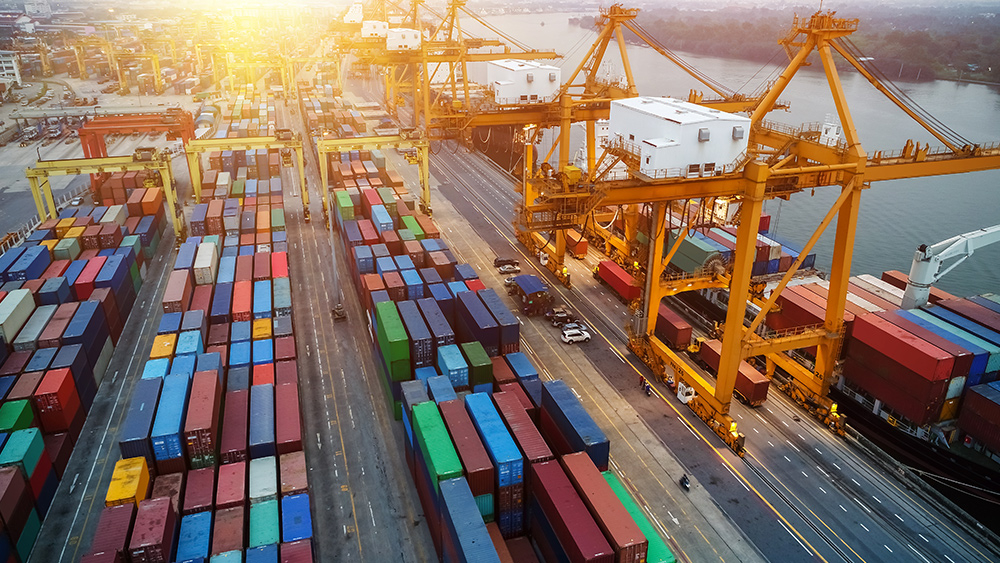
A container of goods crossing the Pacific now costs a small fortune, and the reason is not a sudden hunger for consumer goods. Ocean spot rates have surged even as cargo volumes out of China to the United States slipped roughly 1%. The evidence points to a handful of carriers controlling the supply of ships, tightening the valve while they are legally exempt from U.S. antitrust law. Unless the squeeze eases, the 2027 contracting cycle could hand American families a fresh round of inflation on everyday goods.
Key points:
- Ocean freight rates have jumped 201%, approaching the 250% spike of the 2021 container ship shortage.
- China-to-U.S. East Coast spot rates hit $9,400 per TEU even as China export volumes declined about 1%.
- The top 10 container lines control roughly 90% of global capacity and are exempt from U.S. antitrust law.
- Yang Ming reported a 482% profit surge while warning of volatility heading into the fourth quarter.
- Diesel near $6.50 a gallon and higher freight costs could push inflation up and growth down.
Ocean freight rates have jumped 201%, Bank of America retail analyst Lorraine Hutchinson warned in a note Saturday, closing in on the 250% spike seen during the 2021 container ship shortage. Spot shipments look even worse. FreightWaves reports increases of more than 400%, with the China-to-U.S. East Coast rate reaching $9,400 per TEU – the twenty-foot equivalent unit that serves as the industry’s yardstick. The Baltic Dry Index, which tracks freight rates for several bulk vessel classes, has climbed to December 2023 highs.
The pain reaches the highway too. AAA’s national average diesel price is near $6.50 a gallon, crushing truckers’ margins and lifting trucking rates nationwide. Hutchinson tempered the alarm with a caution. “Most contracts are set in the spring, but we’re watching this for those using spot rates and as a potential headwind for 2027,” she said.
Supply games, not demand fueling the crisis
The rising costs are due to rising demand for these goods. Cargo volumes out of China to the U.S. are down roughly 1%, according to FreightWaves SONAR data. A genuine freight boom would show swelling demand. Instead, the disconnect between flat-to-negative demand and surging prices points to supply-side management by ocean carriers.
Consider who holds the levers. The top 10 ocean container lines control approximately 90% of global container shipping capacity, a concentration that dwarfs OPEC’s roughly 36% share of global oil supply. Those carriers are also exempt from U.S. antitrust law, so they can legally coordinate sailing schedules and pull ships from the market through blank sailings, the cancellation of scheduled voyages, and slow steaming. Julie Van de Kamp put it plainly. “While they may not be collaborating on price, they’re actually collaborating on capacity in ways that give them pricing power,” she said.
The profits tell the story. Taiwan-based carrier Yang Ming reported a 482% profit surge, citing an early peak season and firmer freight rates. Thurlestone Shipping analysts see it differently, calling the surge “something of a perfect storm, with vessel supply tightening and demand firing in both basins at the same time.” Yet the data on China-to-U.S. volumes tells a quieter demand story, and readers can weigh which account fits the evidence.
Carriers also cite nature. El Niño has warmed the Pacific Ocean and stirred typhoon activity, while drier-than-normal conditions have lowered water levels in the Panama Canal, further tightening effective vessel capacity. Van de Kamp characterized the carriers’ posture with a blunt phrase: “No crisis left untouched.”
The bill lands on the household
History explains the swagger. After the 2016 collapse of Hanjin Shipping, spot rates bottomed around $800 per TEU and carriers held no pricing power. The industry then pivoted from chasing market share to defending profitability, a shift that rewarded investors and rewired how rates behave. “It’s no longer about he who has the most ships win,” Van de Kamp said. “It’s who has the highest profitability.”
The stakes extend far beyond shipping executives. More than 80% of world trade volume travels by sea, according to UNCTAD, so a toll at the harbor gate echoes through every aisle of every store. If elevated costs persist through fall and winter, they could intensify inflationary pressure, squeeze corporate margins and weaken growth, particularly if diesel stays high. Businesses facing higher transportation costs will feel pressure to pass them along, and the average shopper is the final stop on that route.
The near-term outlook offers little relief. Craig Fuller advised shippers planning fourth-quarter budgets to expect continued turbulence. Port delays are already increasing, with carriers blaming weather, and blank sailings are keeping capacity tight. Carriers have every incentive to sustain elevated rates, so volatility in both prices and available space should be expected through year’s end, which will make Christmas shopping more expensive for a population already strapped.
Sources include:
Submit a correction >>
Tagged Under:
2027 contracts, antitrust exemption, blank sailings, carrier consolidation, consumer prices, container rates, diesel prices, economic risk, freight index, FreightWaves, Inflation, Lorraine Hutchinson, ocean freight, Panama Canal, Red Sea, shipping costs, spot rates, supply chain, trade policy, Yang Ming
This article may contain statements that reflect the opinion of the author
RECENT NEWS & ARTICLES